 en
 FR
 IT
 ES




Just one to two hours by boat from Stockholm, Grinda is one of the most popular islands in the Swedish archipelago. With its pine forests, smooth granite coves, family-friendly beaches, and rich historical heritage, the island perfectly captures the charm of Sweden's Baltic coastline. Car-free and carefully protected from urban development, Grinda attracts both Stockholm residents and visitors seeking nature, peace, and authentic island life.
A Prime Location in the Archipelago
Grinda is located in the central part of the Stockholm Archipelago, between the islands of Vaxholm, Ljusterö, Möja, and Svartsö. It is one of the easiest islands to reach thanks to regular ferry services from both Stockholm and Vaxholm. Depending on the ferry operator and vessel, the crossing takes between one and two hours.

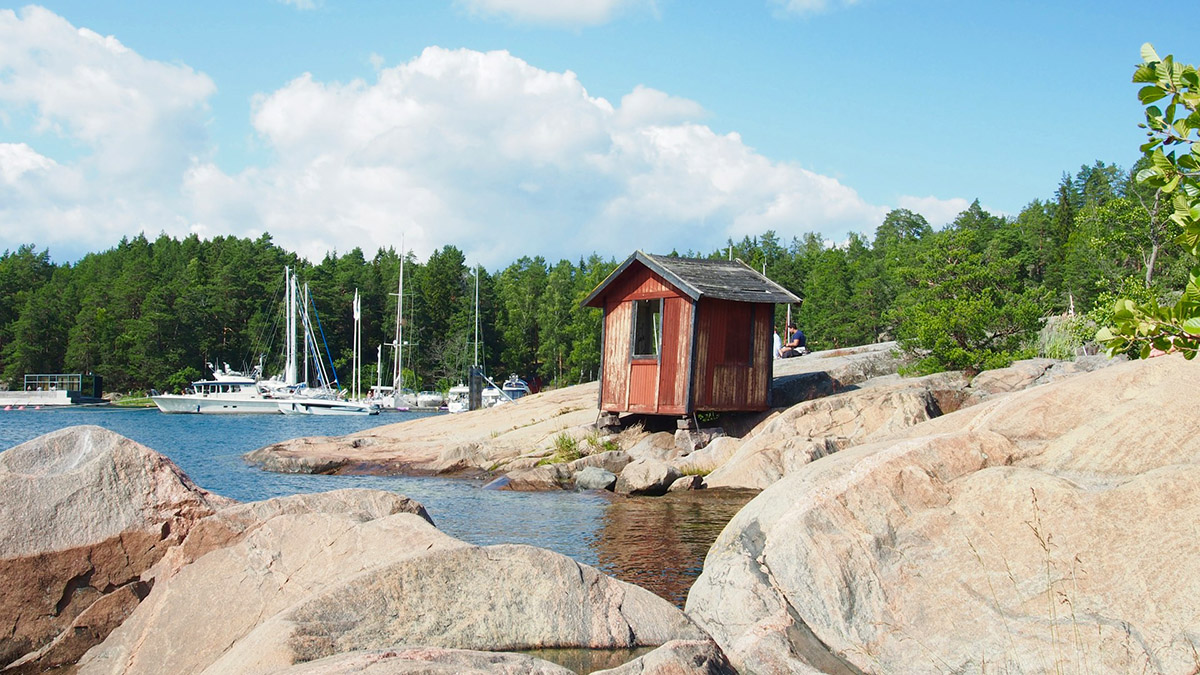
The island stretches for approximately ten kilometers and covers an area of around five square kilometers. Its landscape is typical of the archipelago, featuring expansive glacier-polished granite outcrops, coniferous forests, open meadows, and sheltered bays with the calm waters of the Baltic Sea.
Grinda has no public roads open to motor vehicles. Visitors get around exclusively on foot, by bicycle, or by boat, which greatly contributes to the island's peaceful atmosphere.
An Island Inhabited Since the Middle Ages
Grinda's history dates back to the Middle Ages. The island's earliest inhabitants relied mainly on fishing, farming, and livestock breeding. Like many islands in the archipelago, life was challenging due to the harsh climate, isolation, and poor soil conditions.

A turning point came in the early twentieth century. In 1906, Henrik Santesson, the first Executive Director of the Nobel Foundation, purchased Grinda. He commissioned the construction of an elegant Art Nouveau residence, now known as Grinda Wärdshus. This historic inn quickly became the heart of the island's growing tourism industry.
After the Second World War, in 1944, Grinda was sold to the City of Stockholm to preserve it as a recreational area for the capital's residents. Since 1988, the island has been owned by the Stockholm Archipelago Foundation (Skärgårdsstiftelsen), a non-profit organization dedicated to protecting the islands' natural landscapes and cultural heritage while ensuring public access.
Carefully Managed Development
Unlike many tourist destinations, Grinda has never experienced significant urban development. The island has grown through a careful balance between welcoming visitors and protecting its natural environment.
Today, visitors will find a selection of essential facilities, including a historic inn, restaurant, café, small grocery store, marina, campsite, rental cottages, and a traditional farm that raises sheep, cattle, and poultry.
Most of the island is designated as a nature reserve. Hiking trails are meticulously maintained, and biodiversity conservation is a top priority. Forests, meadows, and shorelines are carefully managed to preserve the characteristic landscapes of the central Stockholm Archipelago.
A Very Small Permanent Population
One of Grinda's defining characteristics is its tiny year-round population. Only a handful of families live on the island throughout the year, mainly operating the farm, accommodation, restaurants, and maintaining the island's facilities.
During the summer, however, the island undergoes a remarkable transformation. Thousands of visitors arrive each day, temporarily making Grinda one of the busiest islands in the archipelago. Despite this seasonal influx, the absence of cars and the island's spacious natural environment ensure that Grinda retains its tranquil atmosphere.
This low population density is a major part of the island's appeal, where nature remains ever-present and the silence is broken only by birdsong or the passing ferries.
A Paradise for Nature Lovers
Grinda's greatest attraction is undoubtedly its spectacular natural scenery. Most visitors come simply to enjoy its unspoiled landscapes.
Well-marked hiking trails wind through pine forests, flower-filled meadows, granite cliffs, and scenic viewpoints overlooking the waterways of the archipelago. Several sandy beaches and numerous smooth granite rocks provide ideal swimming spots during the summer months.

Kayakers particularly appreciate the calm waters surrounding the island, while recreational boaters find the marina an ideal stopover when cruising between the islands of the archipelago.
The island is also home to an abundance of wildlife. Roe deer, foxes, hares, seabirds, and birds of prey are commonly spotted along the trails.
A Must-Visit Destination
Today, Grinda ranks among the most popular day-trip destinations from Stockholm. Its popularity is built on several key advantages:
- First, it is exceptionally easy to reach. Frequent ferry services operate daily throughout the summer season, making it simple to plan a day excursion.
- Second, Grinda offers an authentic Swedish archipelago experience. Unlike some of the more developed islands, it has retained its wild and natural character, making it equally attractive to families, hikers, photographers, and outdoor enthusiasts.

- The historic Grinda Wärdshus is another major attraction. Its restaurant showcases traditional Swedish cuisine, with an emphasis on Baltic fish, locally sourced ingredients, and seasonal specialties.
- Throughout the summer, the island hosts a variety of activities, including live music evenings, boating events, children's entertainment, and markets featuring produce from the island farm.
- Water sports enthusiasts can also enjoy canoe, kayak, and stand-up paddleboard rentals, as well as traditional sauna and recreational play areas.
- Visitors wishing to extend their stay can choose from hotel rooms at the inn, the campsite, or charming forest cottages scattered across the island.
A Model of Sustainable Tourism
Grinda is an excellent example of how tourism and environmental conservation can successfully coexist. Strict limits on vehicle traffic, the protection of natural habitats, the preservation of historic buildings, and the responsible management of visitor facilities have made the island a model for sustainable tourism.
The Stockholm Archipelago Foundation carefully maintains this delicate balance so that future generations can continue to enjoy the island's exceptional natural beauty. This long-term approach perfectly reflects the growing demand for destinations that prioritize environmental stewardship and cultural preservation.

An Essential Escape from Stockholm
For many Swedes, Grinda embodies the perfect image of summer in the Stockholm Archipelago. In just a few hours, visitors leave behind the vibrant energy of Stockholm and enter a landscape dominated by pine forests, glacier-smoothed granite rocks, and the peaceful waters of the Baltic Sea.
Whether hiking, swimming, kayaking, enjoying traditional Swedish cuisine, or simply relaxing in nature, Grinda offers an authentic experience of island Sweden.
Protected for more than a century through exemplary stewardship, this small island remains one of the finest showcases of the Stockholm Archipelago's natural and cultural heritage. It beautifully illustrates the harmony between history, nature, and sustainable tourism that has become one of Sweden's defining strengths.
Do you want to learn more about our fantastic archipelago? read all about it here.
Contact us for the creation of the excursion of your dreams in the Stockholm Archipelago!


